Cascade Bouquet: What It Is, Cost & Who It Flatters
The cascading wedding bouquet — how the waterfall shape is built (wired vs armature), which flowers trail well, honest pricing, and which brides suit it.
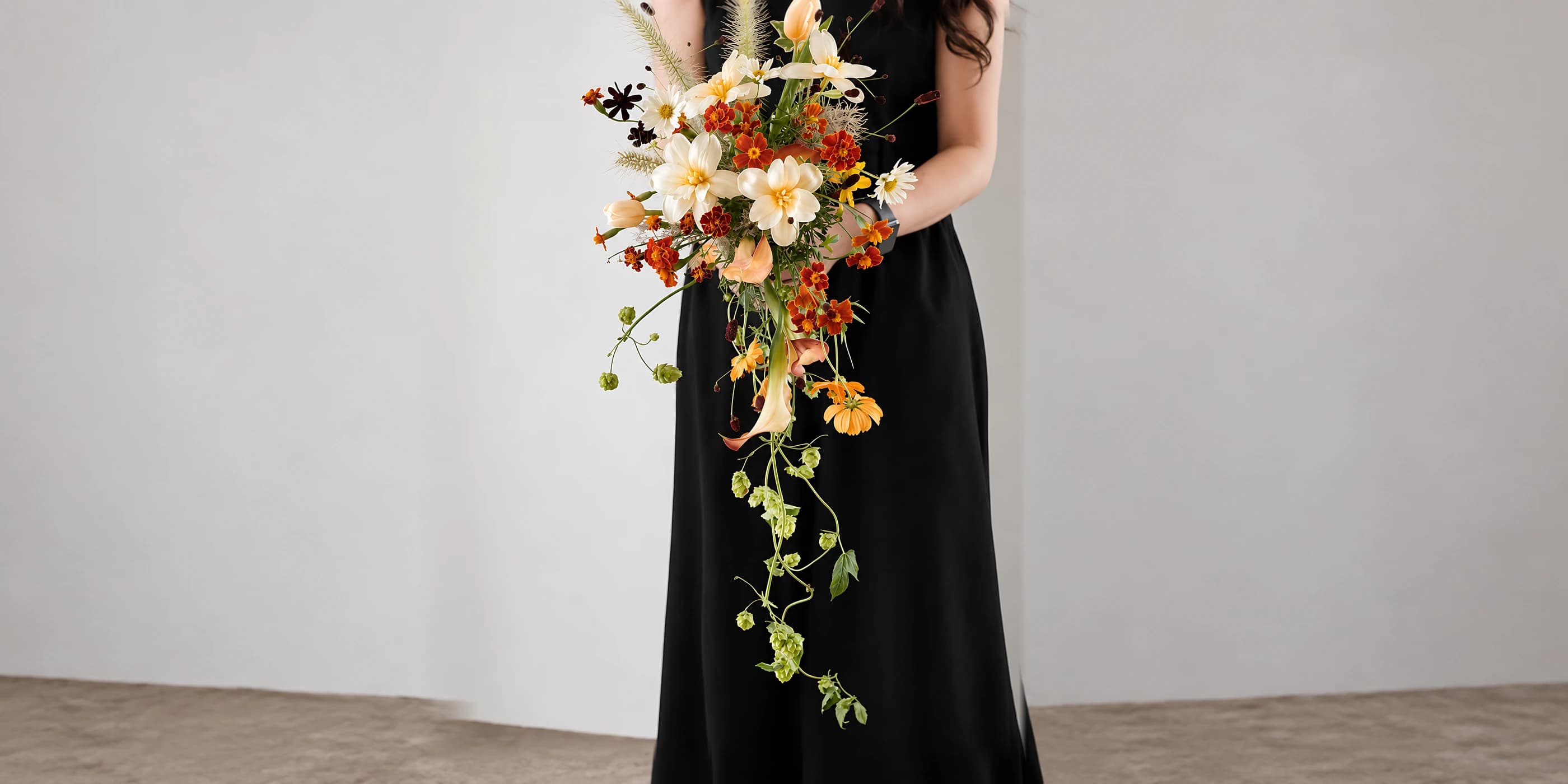
Every bouquet shape answers one question: what do the flowers do in the photographs? The round dome sits; the hand-tied garden style gestures; the cascade moves. It pours out of the bride's hands and keeps going — which is why it owns every full-length shot it appears in, and why it is the most demanding piece of handwork in wedding floristry.
The shape, precisely
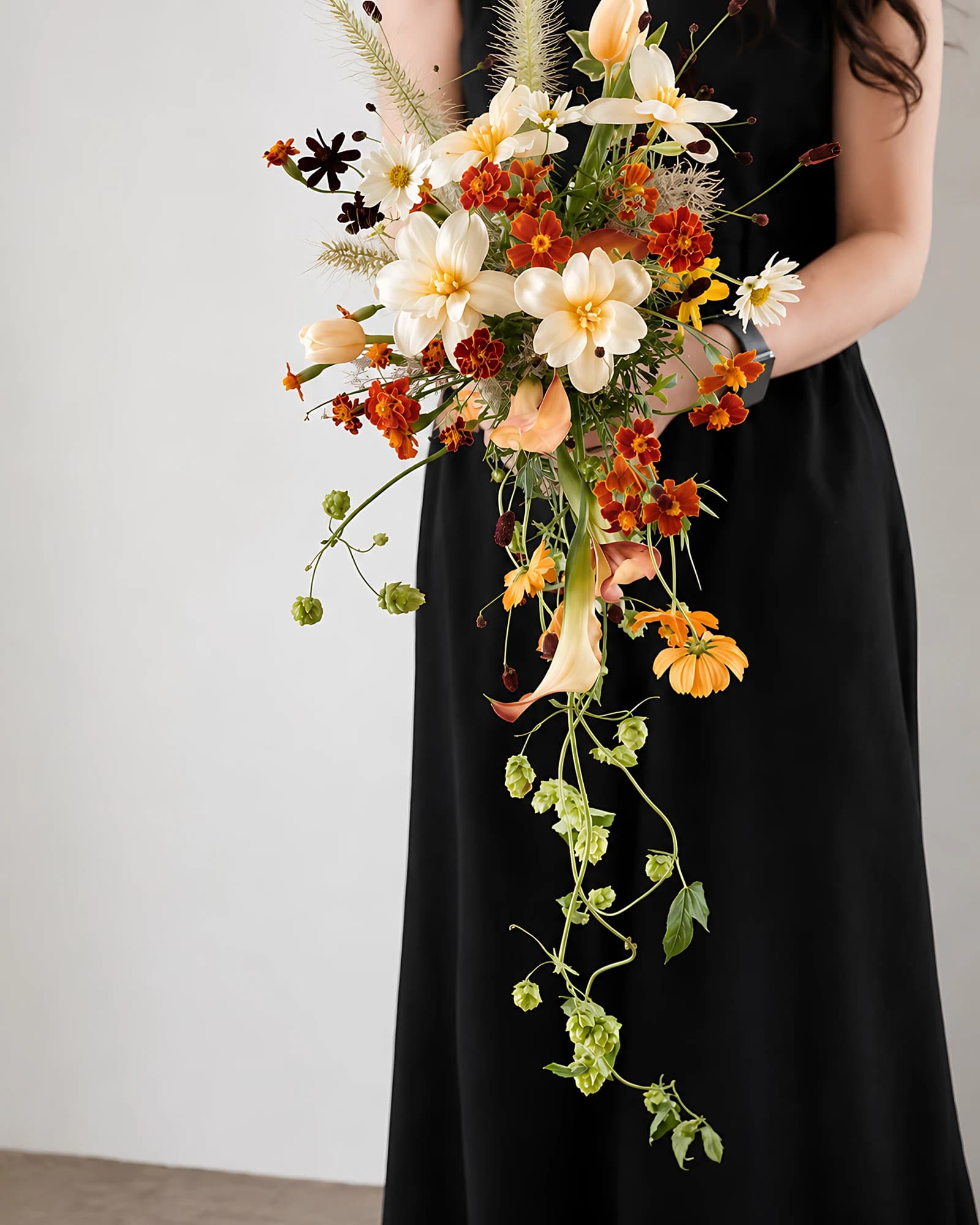
A cascade (waterfall) bouquet has three zones reading as one flow:
- The crown — the fullest blooms, sitting where a round bouquet would be, at hand height.
- The flow line — flowers stepping downward in decreasing size, the visual river.
- The tail — trailing greenery and vine reaching 60-90 cm total drop for a full cascade, 40-50 cm for the softer "teardrop" version.
The proportions matter more than the size. A cascade that drops less than about 40 cm reads as a round bouquet with a loose hem; one that drops past the knee starts to compete with the dress. Our studio rule: the tail ends between hip and knee, and the widest point sits just below the hands, never at them.
Source: Pinterest
How it's actually built (and why it costs what it costs)
The 1980s cascade was stabbed into a plastic foam holder — fast, rigid, and the reason the shape spent two decades looking dated. The modern cascade is built the slow way:
- An armature — a light skeleton of wire (sometimes a woven chicken wire pillow) shaped to the intended drop.
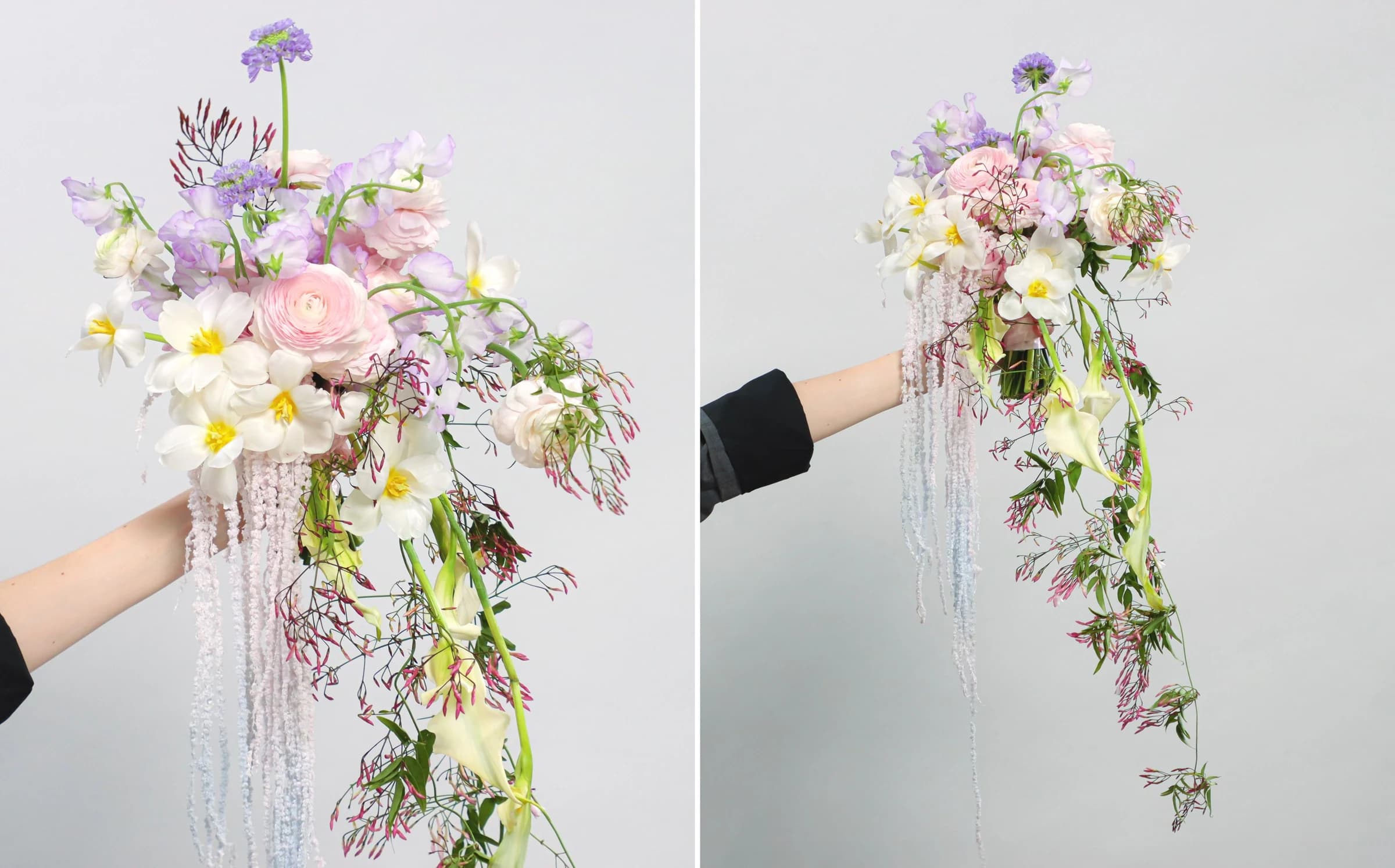
- Wired trailing elements — every vine, fern and orchid spray gets a fine wire spine so it drapes in a chosen curve and springs back when the bride hugs someone.
- Focal flowers woven along the flow line, stems into hidden water sources or, for the sturdy few, cut and sealed.
- A taped and ribboned grip engineered off-centre — a cascade is carried low, on relaxed arms, and the balance point has to sit in the hands, not below them.
That is three to four hours of senior-florist handwork against forty minutes for a round bouquet, which is the honest arithmetic behind the 30-60% price premium on identical flower content. (The wiring techniques themselves are the same pierce-tape-and-armature repertoire from our floral tape and wire guide, applied at full scale.)
The material list that makes or breaks it
A cascade lives or dies by its trailing material — focal flowers are almost interchangeable, the tail is not:
- Amaranthus (hanging varieties) — the deepest, most theatrical drop; burgundy or green ropes of it.
- Jasmine and stephanotis vine — fine, fragrant, bridal to the bone.
- Clematis — trailing curves with flowers along the wire.
- Orchid sprays — phalaenopsis and dendrobium arc naturally and survive a full day dry.
- Ivy, ferns, eucalyptus tails — the workhorse greens.
For the focal line: calla lilies (their stems curve into the flow), garden roses, peonies, ranunculus. Heavy-headed hydrangea belongs in the crown only — hung upside down along a tail it wilts by the vows.
Bouquet by the Lacy Bird studio
Who the cascade flatters
The honest styling matrix, from years of fittings:
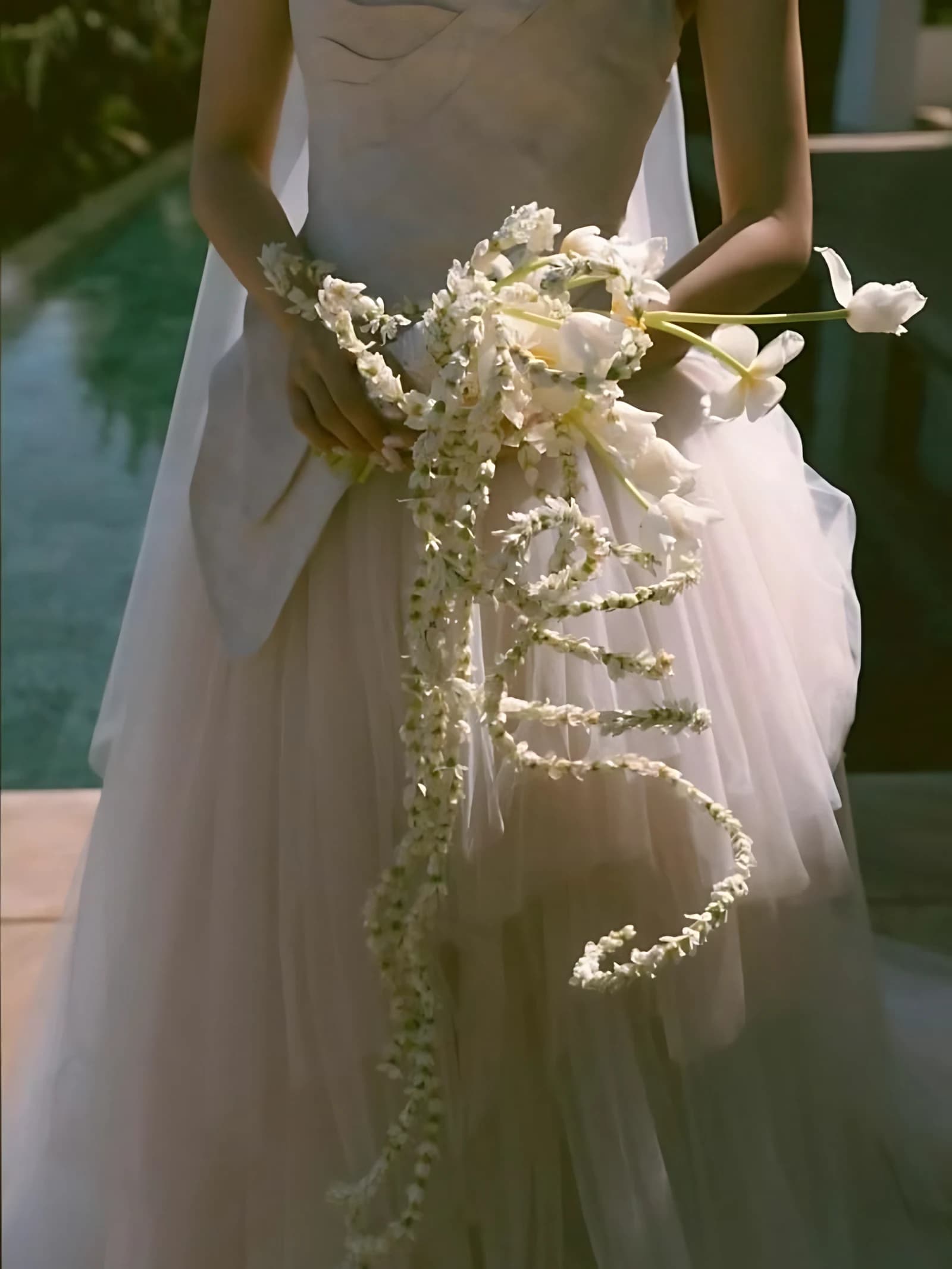
It loves: column and slip dresses (the bouquet supplies the drama the dress declines), A-lines, tall brides, cathedral trains it can echo, stair and full-length photography, and ceremonies with long aisles — the shape is designed to be seen walking.
It fights: heavily embellished ballgowns (two statements, one frame), petite brides carrying a full-length version (the tail swallows them — the teardrop solves this), and windy clifftop ceremonies, where forty minutes of wiring meets one gust with strong opinions.
And one logistical note nobody mentions until it's late: a cascade doesn't fit a standard bouquet box or a vase. Warn your photographer it must be shot early, and ask the florist for a hanging hook or stand if you want it displayed at the reception.
Source: Pinterest
Cascade, teardrop, or round: the thirty-second decision
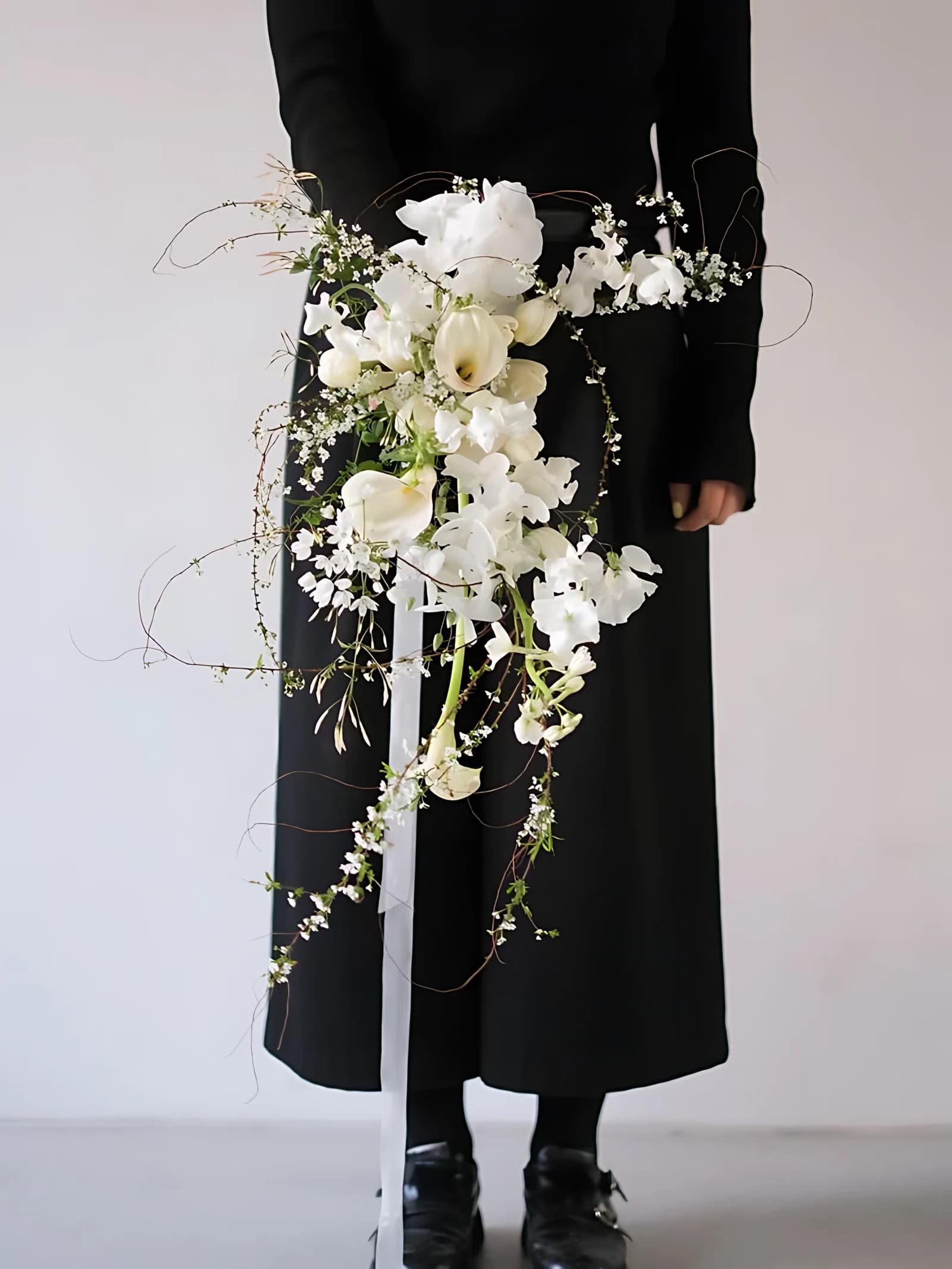
If you want movement and your dress is clean-lined — full cascade. If you love the idea but you're petite, or the dress is ornate — teardrop, the 40-50 cm compromise that photographs as flow without the theatre. If your wedding's drama lives elsewhere (the dress, the venue, the installation over the ceremony arch) — a round or hand-tied bouquet will serve the photos better and your budget kindly. There is no wrong answer; there is only the question of where, in the pictures you'll keep for fifty years, you want the eye to travel.
Source: Pinterest
Header photo: Pinterest
Related reading:
Frequently asked questions
What is a cascade bouquet?
A bridal bouquet built to trail downward from the hands in a waterfall line rather than sit as a dome. It reads as one continuous flow of flowers and greenery, usually 60-90 cm from the top bloom to the lowest trailing tip.
Why do cascade bouquets cost more than round bouquets?
Labour. Every trailing element is wired or woven into a hidden armature so it drapes on purpose and survives being carried; a large cascade can take a senior florist three to four hours against forty minutes for a round bouquet. Expect a 30-60% premium on the same flower content.
Which flowers work in a cascade bouquet?
The spine is trailing material: amaranthus, ivy, jasmine or stephanotis vine, clematis, ferns, and orchid sprays — phalaenopsis and dendrobium bend into natural curves. The focal flowers are conventional: garden roses, peonies, calla lilies laid along the flow line.
Is the cascade bouquet old-fashioned?
It was — the stiff foam-holder cascades of the 1980s dated badly. The modern revival is looser and asymmetric, built on wire so it moves like a living vine. Since royal weddings brought the shape back it has been the second-most-requested silhouette after the round.
What dress suits a cascade bouquet?
Clean vertical lines: column, A-line, slip dresses, and anything with a train the bouquet can echo. A heavily embellished ballgown plus a full cascade is two statements fighting; there, a compact teardrop — the cascade's smaller sibling — is the wiser call.
 Bouquet Builder — by Lacy Bird
Design the bouquet. See it as a photo.
Arrange real flowers on a canvas, then turn the layout into a photorealistic photo in one tap — with live pricing and a shopping list. 570+ varieties, free to start.
Free plan · no card needed